
What Size Furnace Does Your Chicago Home Actually Need?
Most Chicago-area homes need far less furnace than they have. A properly sized system is calculated with an ACCA Manual J load calculation that accounts for square footage, insulation, window area and type, air sealing, ceiling height, orientation, and our local design temperature of roughly zero to minus four degrees Fahrenheit. Sizing by square footage alone, or by matching whatever is already in the basement, routinely produces a furnace that is substantially oversized — and an oversized furnace costs more, wears out sooner, and heats less evenly than a correctly sized one.
What is a Manual J load calculation and why does it matter?
Manual J is the Air Conditioning Contractors of America standard for calculating how much heat a specific building actually loses on a design day. It is not a rule of thumb. The calculation walks the house: wall assemblies and their R-values, attic insulation depth, window count, glazing type and orientation, door area, ceiling heights, infiltration rate, and the local outdoor design temperature. The output is a number in BTUs per hour that says how much heat the house needs replaced at its coldest realistic condition.
The reason it matters is that the alternatives are bad. The old contractor shortcut of multiplying square footage by a fixed BTU figure was built for the housing stock and insulation standards of decades ago. Applied to a Chicago bungalow that has since had its attic insulated, its windows replaced, and its rim joist air sealed, it produces a wildly inflated number. Replacing like for like is worse still, because it inherits every sizing error made by the last installer and compounds it.
What actually goes wrong with an oversized furnace?
An oversized furnace satisfies the thermostat too quickly. It fires, blasts the house with high-temperature air, hits setpoint in a few minutes, and shuts off — then repeats that cycle all day. That is short cycling, and it produces four distinct problems. Comfort suffers, because rooms at the end of long duct runs never get their share before the burner stops. Efficiency suffers, because a furnace burns least efficiently during startup and an oversized unit is starting constantly. Humidity control suffers in the shoulder seasons. And component life suffers, because igniters, inducer motors, and blower motors all wear per cycle, not per hour of runtime.
The counterintuitive result is that a correctly sized furnace runs longer, more often, and lasts longer while doing it. Long, steady burn cycles hold room temperatures within a tighter band, move air through the whole duct system, and keep the heat exchanger in a stable thermal state instead of expanding and contracting a dozen times an hour. If you have ever wondered why an old, modest furnace outlasted the newer, bigger one that replaced it, this is usually the answer.
What size furnace do Chicago homes typically need?
There is no honest universal number, and any contractor who gives you one over the phone is guessing. What can be said is that the range is wide and depends far more on the building envelope than on the floor plan. A tightly sealed, well-insulated 1,800-square-foot home in Buffalo Grove built in the last twenty years may need less than half the heating capacity of a drafty 1,800-square-foot Chicago two-flat with original single-pane windows and no wall insulation. Same size, radically different load.
Age and envelope beat square footage. Insulation, air sealing, and window quality drive the number.
Window area and orientation matter. Large north-facing glass adds meaningfully to load.
Ceiling height changes volume, not just floor area. Nine and ten-foot ceilings are common in older Chicago housing.
Our design temperature is roughly zero to minus four degrees. Sizing to an extreme polar vortex event guarantees oversizing for the other ninety-nine percent of winter.
Modulating and two-stage furnaces tolerate sizing error better by running at reduced capacity most of the season.
What should you ask a contractor before signing a furnace quote?
Ask whether they performed a Manual J, and ask to see it. A real load calculation is a document with inputs and an output, not a sentence in a proposal. Ask what design temperature they used. Ask whether they also ran Manual S — equipment selection — and Manual D, which sizes the ductwork the new furnace has to breathe through. Installing a properly sized furnace onto undersized ductwork simply relocates the problem.
Ask about staging. A single-stage furnace is either fully on or fully off, so it lives or dies by sizing accuracy. A two-stage furnace runs at roughly two-thirds capacity most of the time and only calls on full output during genuine cold snaps, which is a far better match for how Chicago winter actually behaves — long stretches in the twenties and thirties punctuated by a handful of brutal days. A modulating furnace goes further still. Ask what the price difference is and what it buys in your specific house.
What incentives are available in Illinois right now?
The federal 25C Energy Efficient Home Improvement Credit, which offered up to $2,000 for qualifying heat pumps and up to $600 for qualifying furnaces and air conditioners, ended for equipment placed in service after December 31, 2025. Homeowners planning a 2026 replacement should not budget around it.
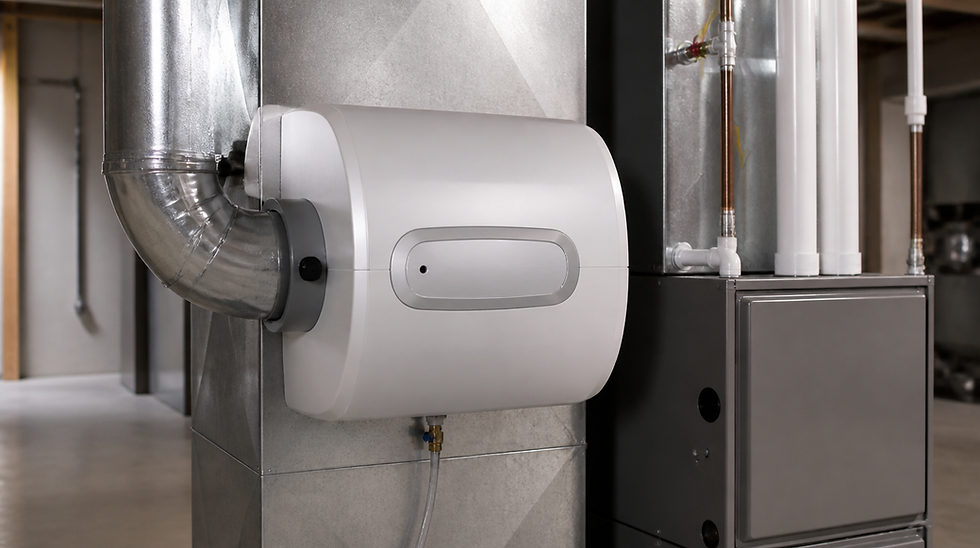
Utility rebates in Illinois are still active. Per distributor rebate documentation published for 2026, Nicor Gas offers $150 for a gas furnace at 95 percent AFUE or higher and $225 at 97 percent AFUE or higher, $350 for a high-efficiency boiler at 95 percent AFUE or higher, and $25 for an ENERGY STAR smart thermostat. ComEd offers $1,400 and $2,000 tiers for qualifying ducted air source heat pumps and $1,000 for qualifying ductless mini-splits, plus $75 for a smart thermostat. Amounts and qualifying efficiency thresholds change, so verify current terms with your utility before you buy. Every complete installation from CCC Mechanical also includes a free Honeywell T5 WiFi thermostat and a free Aprilaire whole-home humidifier — see the promotions page.
Key takeaways
Correct sizing comes from an ACCA Manual J load calculation, not square footage math or matching the old unit.
Oversized furnaces short cycle, which hurts comfort, efficiency, humidity control, and component life.
Chicago's winter design temperature is roughly zero to minus four degrees Fahrenheit; sizing to extreme outliers guarantees oversizing.
Envelope quality — insulation, air sealing, windows — drives the load far more than floor area.
Two-stage and modulating furnaces are more forgiving of sizing error and better matched to a typical Chicago winter.
The federal 25C credit ended after December 31, 2025; Nicor Gas and ComEd rebates remain available for 2026.
Frequently asked questions
How many BTUs do I need for a 2,000 square foot house in Chicago?
There is no reliable single answer. Depending on insulation, air sealing, window quality, and ceiling height, two 2,000-square-foot Chicago homes can differ by more than double in heating load. Only a Manual J calculation on your specific house produces a defensible number.
Is a bigger furnace better for extremely cold days?
No. Sizing to a once-a-decade polar vortex event leaves the furnace oversized for the entire rest of winter, causing short cycling and premature wear. A correctly sized two-stage furnace handles design-day cold at full output and the rest of the season at reduced output.
What is a good AFUE rating for a furnace in Illinois?
Condensing furnaces at 95 percent AFUE and above are standard for the Chicago climate and qualify for Nicor Gas rebates. The 97 percent AFUE tier carries a larger rebate and lower operating cost, with a higher equipment price to weigh against it.
Does CCC Mechanical perform load calculations before quoting?
Yes. CCC Mechanical LLC sizes replacement equipment to the house rather than to the outgoing unit, and installs across Chicago, Arlington Heights, Buffalo Grove, Elmwood Park, Melrose Park, Niles, and Northbrook. Call 630-827-9024 for an assessment.
Planning a furnace replacement this winter? Call 630-827-9024. Every complete installation includes a free Honeywell T5 smart thermostat and a free Aprilaire whole-home humidifier — see the promotions page.

Comments