
Do Heat Pumps Actually Work in a Chicago Winter?
Yes — modern cold-climate air source heat pumps produce useful heat well below zero Fahrenheit, which covers essentially all of a Chicago winter. Capacity and efficiency do fall as outdoor temperatures drop, so most Chicagoland installations pair a heat pump with a gas furnace in a dual-fuel configuration: the heat pump handles the long stretches in the twenties and thirties, and the furnace takes over on the coldest days. ComEd rebates of $1,400 to $2,000 apply to qualifying ducted systems through 2026.
What makes a heat pump a "cold-climate" heat pump?
A heat pump does not create heat, it moves it, extracting energy from outdoor air and delivering it indoors. That sounds implausible at ten degrees until you remember that "cold" air still contains substantial thermal energy relative to absolute zero. What changed over the last decade is the compressor. Older single-speed heat pumps lost most of their capacity by the time it hit 25 degrees. Variable-speed inverter compressors with vapor injection maintain a far larger share of rated capacity down into negative territory.
The specification to look for is HSPF2, the current heating seasonal performance factor rating, along with the manufacturer's published capacity table at 17 degrees and 5 degrees Fahrenheit. A unit that holds 70 to 80 percent of its rated capacity at 5 degrees behaves very differently in a Chicago January than one that holds 40 percent. Do not accept a general claim of "cold climate rated" without seeing the capacity table for the specific model being quoted.
Why do most Chicago installations end up dual-fuel?
Dual fuel means a heat pump and a gas furnace share one duct system, with controls that switch between them at a set outdoor temperature called the balance point. Above that temperature the heat pump runs, because moving heat electrically is cheaper per BTU than burning gas. Below it the furnace runs, because heat pump efficiency has fallen far enough that gas wins on cost. The switchover point is a settable number, and it should be calculated from your actual electric and gas rates rather than left at a factory default.
This configuration suits Chicago's weather pattern unusually well. Our winters are not uniformly brutal — they are long stretches in the twenties and thirties with a handful of genuinely severe days. The heat pump covers the majority of heating hours efficiently, and the furnace covers the tail. It also eliminates the anxiety that stops most homeowners from considering a heat pump at all, because the gas furnace is still there for the polar vortex week.
Balance point — the outdoor temperature where the system switches from heat pump to furnace, typically set between 20 and 35 degrees.
Defrost cycle — the outdoor coil accumulates frost and periodically reverses to clear it; brief steam from the outdoor unit is normal, not a fault.
Auxiliary heat — in all-electric installations, resistance strips fill the gap; these are expensive to run and should engage rarely.
Supplemental capacity — the furnace in a dual-fuel system, sized to carry the house at design temperature on its own.
What does a heat pump cost to run in Chicago compared to gas?
The honest answer is that it depends on the ratio of your electric rate to your gas rate, and both move. What the technology does is change the shape of the comparison. A gas furnace at 96 percent AFUE delivers 0.96 units of heat per unit of fuel energy — it can never exceed one. A heat pump delivers two to four units of heat per unit of electricity at moderate temperatures, because it is moving existing heat rather than creating it. That coefficient of performance falls as it gets colder, and somewhere on that curve gas becomes cheaper.
This is why the balance point setting is not a detail. Set it too high and you burn gas during hours the heat pump would have been cheaper. Set it too low and you run the heat pump into temperatures where it costs more per BTU than the furnace. A competent installer calculates it from your utility rates and revisits it if rates shift substantially. Ask whoever quotes you how they intend to determine that number.
What rebates and incentives apply in Illinois for 2026?
Per distributor rebate documentation published for 2026, ComEd offers $1,400 for qualifying ducted air source heat pumps and ducted mini-splits meeting Tier 1 thresholds of 15.2 SEER2, 9.4 EER2, and 8.1 HSPF2; $2,000 at Tier 2 thresholds of 17 SEER2, 9.4 EER2, and 8.5 HSPF2; and $1,000 for ductless and mixed-use mini-split heat pumps at 17 SEER2, 9.4 EER2, and 10 HSPF2. ComEd also offers $75 for a qualifying smart thermostat, and Nicor Gas offers $25. Those programs are documented as running through December 31, 2026.
The federal picture changed. The 25C Energy Efficient Home Improvement Credit, which provided up to $2,000 toward a qualifying heat pump, ended for equipment placed in service after December 31, 2025. If you are budgeting a 2026 project, plan around utility rebates rather than the federal credit, and confirm current rebate amounts and qualifying efficiency tiers directly with ComEd before purchase — programs are revised periodically and equipment must meet the thresholds in force on the install date.
Is a heat pump right for your house?
Heat pumps reward well-sealed, well-insulated homes and punish leaky ones, because a lower heating load means the heat pump covers more of the season before the balance point arrives. A 1990s or newer home in Buffalo Grove or Northbrook is generally a strong candidate. A pre-war Chicago two-flat with original windows and uninsulated walls may still work, but the economics improve dramatically if envelope work happens first.
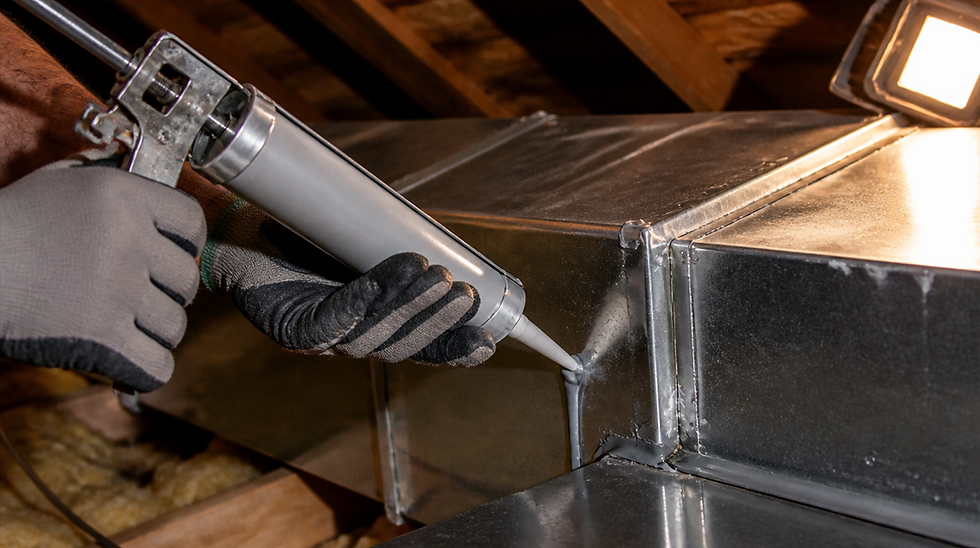
Ductwork matters too. Heat pumps deliver air at a lower supply temperature than a furnace — comfortable, but noticeably less hot at the register — which means they need adequate airflow to deliver the same heat. Undersized or leaky ducts that a furnace could brute-force past will show up immediately as comfort complaints on a heat pump. Any honest heat pump proposal for a Chicago home includes a look at the duct system, not just the equipment.
Key takeaways
Modern cold-climate heat pumps produce useful heat below zero Fahrenheit; capacity and efficiency decline as temperatures fall.
Ask for the manufacturer's capacity table at 17 and 5 degrees, not just a "cold climate" label.
Dual-fuel — heat pump plus gas furnace on one duct system — suits Chicago's weather pattern best.
The balance point should be calculated from your actual electric and gas rates, not left at a default.
ComEd rebates of $1,000 to $2,000 apply to qualifying heat pumps through December 31, 2026.
The federal 25C credit ended for equipment placed in service after December 31, 2025.
Frequently asked questions
Do heat pumps work below zero in Chicago?
Yes. Cold-climate models with variable-speed inverter compressors continue producing heat below zero Fahrenheit, though at reduced capacity. Most Chicago-area installations pair one with a gas furnace so the furnace covers the coldest days.
What is dual-fuel heating?
A dual-fuel system combines an air source heat pump with a gas furnace on shared ductwork. Controls switch between them at a set outdoor temperature — the balance point — running whichever source is cheaper at that condition.
Why is my heat pump steaming in winter?
That is a normal defrost cycle. The outdoor coil accumulates frost, and the system briefly reverses to melt it, producing visible steam. It should last a few minutes and happen periodically, not constantly.
Does CCC Mechanical install heat pumps in the Chicago suburbs?
Yes. CCC Mechanical LLC installs and services heat pump and dual-fuel systems across Chicago, Arlington Heights, Buffalo Grove, Elmwood Park, Melrose Park, Niles, and Northbrook. Call 630-827-9024 to discuss whether your home is a good candidate.
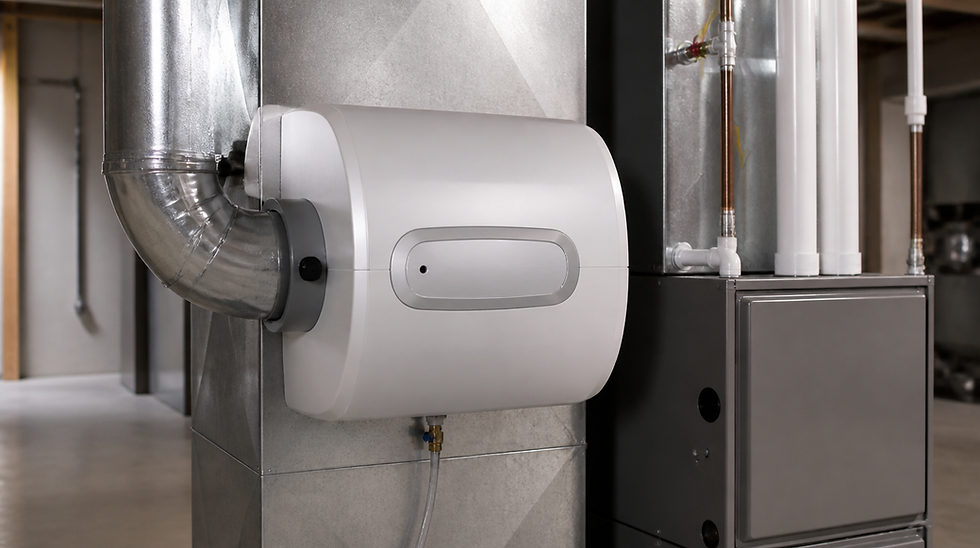
Considering a heat pump or dual-fuel system? Call 630-827-9024. Every complete installation includes a free Honeywell T5 smart thermostat and a free Aprilaire whole-home humidifier — see the promotions page.

Comments